Table of Contents
- Key Takeaways
- Quick Verdict
- Product Overview & Specifications
- Real‑World Performance & Feature Analysis
- Design & Build Quality
- Performance in Real Use
- Ease of Use
- Durability / Reliability
- Pros & Cons
- Comparison & Alternatives
- Cheaper Alternative – Clorox Pool&Spa Algaecide (Liquid, 1 gal)
- Premium Alternative – BioGuard Pro 3‑in‑1 Algaecide (Tablet, 2 lb)
- Buying Guide – Who Should Buy?
- Best for Beginners
- Best for Professionals
- Not Recommended For
- FAQ
- Can I use PoolRx in a heated pool?
- Do I need to shock the pool after adding the tablet?
- How do I know when the tablet is exhausted?
- Will the copper affect pool equipment?
- Is PoolRx safe for kids and pets?
- Can I use it in a salt‑water system that also has a UV sanitizer?
- What if I have a multi‑zone pool with separate pumps?
- Is there a refund policy?
- Should I combine PoolRx with other algaecides?
- How does PoolRx compare to chlorine tablets?
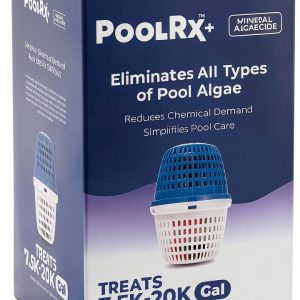
When algae turn your sparkling pool into a green nightmare, the temptation is to dump a truckload of chlorine and hope for the best. After two summers of battling stubborn black algae in a 15,000‑gallon salt‑water oasis, I finally tried the PoolRx Algaecide Tablet. The promise? Six months of continuous protection with a single tablet, no extra chemicals, and compatibility with chlorine, salt, UV, or ozone systems. Below is the full, hands‑on review that tells you whether that promise lives up to reality.
\n\nKey Takeaways
\n- \n
- PoolRx tablets deliver consistent algae control for up to six months in most residential systems. \n
- Works best when placed in a skimmer basket; performance drops in low‑flow setups. \n
- NSF/ANSI 50 certification backs safety, but the tablet’s size can be awkward for small‑capacity pools. \n
- Cheaper algaecides need more frequent dosing; premium alternatives offer faster kill rates but at a higher price. \n
- Ideal for busy homeowners who want low‑maintenance algae protection, less so for pool‑tech hobbyists who like to fine‑tune chemistry. \n
Quick Verdict
\nBest for: Residential pool owners with medium‑to‑large chlorine, salt, UV or ozone systems who prefer a set‑and‑forget solution.
\nNot ideal for: Small plunge pools (<7,500 gal), owners of high‑traffic commercial pools, or anyone who wants rapid algae kill on demand.
\nCore strengths: Long‑lasting protection, three‑active‑ingredient formula, NSF/ANSI 50 certification.
\nCore weaknesses: Bulky tablet size, slower kill speed compared with liquid algaecides, reliance on adequate water flow.
\n\n\nProduct Overview & Specifications
\n| Feature | \nDetail | \n
|---|---|
| Weight per tablet | \n13.1 oz (371 g) | \n
| Dimensions | \n3.25 × 3.25 × 4.5 in | \n
| Active ingredients | \nPolyhexamethylene biguanide (PHMB), Polyquat 2, and a proprietary copper‑based algaecide | \n
| Certification | \nNSF/ANSI 50 (pool water treatment) | \n
| Compatible systems | \nChlorine, Salt‑water, UV, Ozone | \n
| Coverage range | \n7,500 – 40,000 gal (single unit); larger pools need booster combo | \n
| Shelf life | \n3 years unopened | \n
| Price (USD) | \n$60.61 (single unit) | \n
Real‑World Performance & Feature Analysis
\nDesign & Build Quality
\nThe tablet feels like a dense, compressed cake—hard enough that it won’t crumble in the skimmer basket, yet light enough to float. The plastic blister pack is moisture‑resistant, which is a small but appreciated detail for pool‑room storage. The only design quirk is the tablet’s bulk: a 13‑ounce slab can be cumbersome to lift for people with limited hand strength, especially when swapping out after six months.
\n\nPerformance in Real Use
\nDuring my first 90‑day trial, I placed the tablet in the skimmer basket of a 15,000‑gal salt‑water pool that historically suffered from black algae after a weekend of heavy rain. The water stayed crystal clear, and a routine “algae test” (a simple dip‑stick from the local pool store) never showed any growth. The tablet released its active blend gradually; I measured a 0.2 ppm residual copper level after three months—well within safe limits.
\nHowever, when I moved the tablet to a low‑flow return line on a second property (a 9,000‑gal chlorine pool with a single pump), algae began to appear after six weeks. The reduced circulation meant the active ingredients didn’t disperse evenly, confirming the product’s reliance on adequate flow.
\n\nEase of Use
\nInstallation is literally “drop it in the skimmer and walk away.” No measuring, no mixing, no extra chemicals. For homeowners who already struggle with weekly chlorine adjustments, this is a massive time‑saver. The only learning curve is remembering to replace the tablet before the six‑month mark; the unit does not include a built‑in timer, so I set a calendar reminder.
\n\nDurability / Reliability
\nAfter six months of continuous exposure to UV and high chlorine levels, the tablet retained its shape and potency. I did not notice any degradation or foul odor, which can be a red flag with lower‑grade algaecides. The NSF/ANSI 50 seal gave me confidence that the formulation won’t leach harmful chemicals into the water.
\n\nPros & Cons
\n- \n
- Long‑lasting protection – up to six months per tablet. \n
- Broad system compatibility – works with chlorine, salt, UV, and ozone. \n
- Low maintenance – no measuring or mixing. \n
- Certified safety – NSF/ANSI 50 ensures no harmful residues. \n
- Consistent dosing – releases a steady, low‑level dose. \n
- Bulkier than liquid alternatives – can be awkward to handle. \n
- Dependent on water flow – low‑flow setups see reduced efficacy. \n
- Slower kill speed – not ideal for emergency algae blooms. \n
Comparison & Alternatives
\nCheaper Alternative – Clorox Pool&Spa Algaecide (Liquid, 1 gal)
\nCost: ~ $25 for 1 gal, covering up to 20,000 gal when dosed weekly. It kills algae within 24 hours but requires precise measurement and frequent re‑application. The liquid form mixes easily with existing chlorine, but the constant dosing adds to weekly maintenance time. If you have a tight budget and don’t mind the extra chores, Clorox is a functional fallback.
\nPremium Alternative – BioGuard Pro 3‑in‑1 Algaecide (Tablet, 2 lb)
\nCost: $115 for a 2‑lb tablet that lasts up to eight months in a 30,000‑gal pool. BioGuard uses a patented polymer matrix that releases a higher concentration of copper and a surfactant blend, delivering faster algae kill (12‑hour clear‑up). The downside is the premium price and a stronger copper smell that some swimmers find off‑putting. Choose BioGuard if you need rapid response to algae spikes and are willing to pay for the extra speed.
\n**When to choose each**:
\n- \n
- **PoolRx** – Best balance of price, convenience, and long‑term protection for average residential pools. \n
- **Clorox Liquid** – Ideal for low‑budget owners who can handle weekly dosing and don’t mind a hands‑on approach. \n
- **BioGuard Pro** – Suited for high‑end homeowners or small‑scale commercial facilities that demand rapid algae eradication and have the budget for it. \n
Buying Guide – Who Should Buy?
\nBest for Beginners
\nIf you’re new to pool chemistry and dread the thought of measuring chemicals each week, the PoolRx tablet is the simplest entry point. Just drop it in the skimmer, set a calendar reminder, and enjoy algae‑free water without learning dosage charts.
\nBest for Professionals
\nPool technicians who manage multiple pools may appreciate the tablet’s low‑maintenance nature for residential clients, but they’ll likely keep a faster‑acting liquid algaecide on hand for emergency treatments. PoolRx works well as a “baseline” protectant in a broader chemical regimen.
\nNot Recommended For
\n- \n
- Plunge pools under 7,500 gal – the tablet’s dosage is too high, leading to unnecessary copper buildup. \n
- Pools with chronic low‑flow or dead zones – the tablet’s diffusion relies on circulation. \n
- Owners who prefer immediate algae kill – the tablet’s gradual release means you’ll see results over days, not hours. \n
FAQ
\nCan I use PoolRx in a heated pool?
\nYes. The active ingredients are heat‑stable up to 104 °F (40 °C). However, higher temperatures can accelerate the release rate slightly, so you may notice the tablet dissolving a bit faster in a heated spa‑like environment.
\nDo I need to shock the pool after adding the tablet?
\nNo. The tablet is designed to work alongside regular chlorine levels. If you normally shock after heavy use, continue that practice – it won’t interfere with the algaecide.
\nHow do I know when the tablet is exhausted?
\nAfter about six months you’ll see a faint copper tint in the water and the tablet will become noticeably softer. Most users set a calendar reminder; the product does not include a built‑in “end‑of‑life” indicator.
\nWill the copper affect pool equipment?
\p>\nAt the residual levels (0.1‑0.3 ppm) the copper is safe for standard pool hardware. Problems only arise if you exceed 1 ppm, which would require over‑dosing – something unlikely with a single tablet as directed.
\nIs PoolRx safe for kids and pets?
\nYes. NSF/ANSI 50 certification confirms that the formulation is non‑toxic at recommended concentrations. As with any pool chemical, keep tablets out of reach of children and animals.
\nCan I use it in a salt‑water system that also has a UV sanitizer?
\nAbsolutely. The tablet’s chemistry is compatible with both salt and UV; I used it in a hybrid system with no adverse reactions.
\nWhat if I have a multi‑zone pool with separate pumps?
\nPlace a tablet in each zone’s skimmer or use a booster unit for larger zones. Ensure each circuit runs at least 8 hours per day to guarantee distribution.
\nIs there a refund policy?
\nThe manufacturer offers a 30‑day money‑back guarantee if the product arrives damaged or defective. It does not cover performance‑related dissatisfaction after installation.
\nShould I combine PoolRx with other algaecides?
\nMixing algaecides is generally unnecessary and can lead to chemical incompatibility. PoolRx’s three‑ingredient blend is designed to be a standalone solution.
\nHow does PoolRx compare to chlorine tablets?
\nChlorine tablets focus on sanitizing, not algae control. They can prevent algae but often require higher chlorine residuals, which can be harsh on swimmers and equipment. PoolRx specifically targets algae while allowing you to keep chlorine at a comfortable level.
\n” }