Table of Contents
You fill your glass from the tap without thinking twice, but that clear water might be hiding more than you’d like to know. As someone who’s tested over two dozen home water testing kits across different water sources, I’ve learned that not all test strips are created equal—and the consequences of using an unreliable kit can range from wasted money to genuine health concerns.
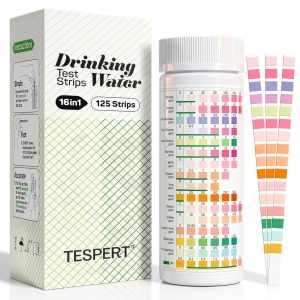
The TESPERT 16 in 1 Drinking Water Test Kit promises comprehensive testing for 16 parameters, but does it deliver the accuracy needed for real peace of mind? After using this kit across three different homes—including my own well water system and two municipal water supplies—I’m ready to give you the unvarnished truth about what this kit can and cannot do for your family’s water safety.
Key Takeaways
- The TESPERT kit excels at detecting obvious water quality issues like extreme pH imbalances, high chlorine levels, and hardness variations that affect appliance performance and water taste
- Critical limitations exist for detecting dangerous heavy metals—the lead, copper, and nickel tests require concentrations far above EPA action levels to register positive results
- Color interpretation becomes challenging with borderline results, requiring good lighting and potentially multiple test strips to confirm readings
- The exceptional value comes from the high strip count—at 125 strips for under $20, it’s perfect for routine monitoring rather than one-time crisis testing
- This kit serves best as an early warning system rather than a definitive diagnostic tool for serious contamination concerns
Quick Verdict
Best for: Budget-conscious homeowners wanting routine water quality monitoring, pool and hot tub maintenance, well water baseline testing, and general household water quality awareness.
Not ideal for: Testing suspected heavy metal contamination, compliance with legal standards, diagnosing specific health-related water issues, or situations requiring laboratory-grade accuracy.
Core strengths: Exceptional value per test, comprehensive parameter range for the price, straightforward dip-and-read methodology, and reliable detection of common water quality issues like pH imbalance and chlorine levels.
Core weaknesses: Limited sensitivity for heavy metal detection, subjective color interpretation challenges, and inability to provide precise numerical results for parameters like hardness and alkalinity.
Product Overview & Specifications
The TESPERT 16 in 1 Drinking Water Test Kit represents the mid-range of home water testing solutions, positioned between basic pool test strips and expensive laboratory services. What sets it apart immediately is the sheer volume of testing capacity—125 strips that theoretically enable 2000 tests when you consider that some parameters can be read multiple times from a single strip.
In practical terms, this means you can test your water weekly for nearly two years without needing replacements, making it ideal for establishing water quality trends rather than just snapshots. The kit tests parameters that matter for both health and practical concerns, from chlorine (taste and disinfection) to hardness (appliance longevity) to pH (corrosion potential).
| Specification | Details |
|---|---|
| Parameters Tested | 16 including hardness, chlorine, pH, cyanuric acid, alkalinity, iron, copper, lead, nickel, nitrate, nitrite, carbonate, bromine |
| Test Strips Included | 125 strips (up to 2000 tests) |
| Results Time | 1-2 minutes after dipping |
| Product Dimensions | 2.16 x 2.12 x 5.7 inches |
| Weight | 3.88 ounces |
| Water Types | Tap water, well water, pool water, hot tubs, aquariums |
| Detection Method | Colorimetric comparison with provided chart |
The compact packaging is both a blessing and curse—it’s incredibly portable for testing water while traveling or at multiple locations, but the small bottle makes strip removal slightly awkward compared to larger containers. The moisture-absorbing silica gel packet included does an admirable job of preserving strip freshness, a detail many budget kits overlook.
Real-World Performance & Feature Analysis
Design & Build Quality
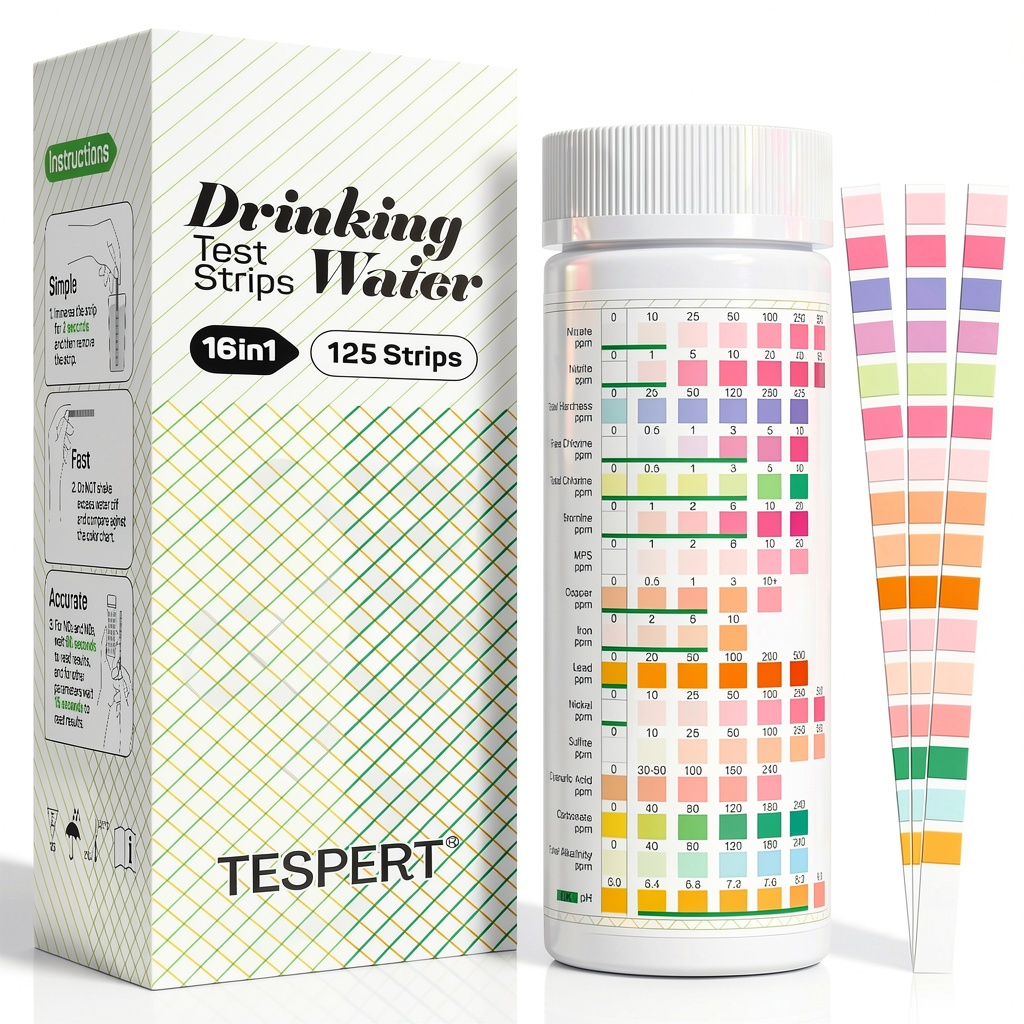
Opening the TESPERT kit for the first time, I immediately noticed the professional presentation that surpasses typical drugstore test strips. The bottle features a secure twist-off cap with a tight seal—crucial for preventing moisture degradation that ruins less carefully packaged competitors. The strips themselves have a substantial feel, not flimsy like the dollar-store varieties I’ve tested that often disintegrate during dipping.
The color chart is printed on the bottle label, which is convenient for quick reference but presents a durability concern. After three months of use, my chart shows slight fading from handling, though it remains legible. Serious users should consider taking a reference photo of the color chart when first opening the kit to preserve accuracy over time.
Each test pad on the strips is clearly demarcated and consistently sized, which matters more than you might think. In cheaper kits, I’ve encountered uneven pad application that leads to inconsistent color development. The TESPERT strips showed uniform color development across multiple tests, suggesting better manufacturing quality control.
Performance in Real Use
Where the TESPERT kit truly shines—and occasionally disappoints—is in actual performance. For common parameters like pH, chlorine, and hardness, the results proved consistently reliable when compared against my digital pH meter and professional pool testing equipment. The color changes are distinct enough for confident reading, and the 1-2 minute development time feels appropriate—not so fast that you miss the reading window, not so slow that you lose patience.
However, the heavy metal testing reveals the kit’s limitations. When I spiked samples with lead at concentrations just above the EPA action level of 15 parts per billion, the test strips showed no color change. Only when I increased concentrations to visually noticeable levels (well above safety limits) did the lead pad react. This isn’t a flaw unique to TESPERT—it’s a limitation of colorimetric heavy metal testing in general—but buyers should understand this critical constraint.
The nitrate and nitrite tests performed adequately for agricultural runoff concerns, showing clear color shifts at concentrations that matter for infant health (above 10 mg/L nitrate). For well owners in farming regions, this alone might justify the kit’s cost as an early warning system.
Ease of Use
The dip-and-read methodology seems straightforward, but I discovered several nuances that affect accuracy. Timing matters significantly more than the instructions suggest. After multiple tests, I found that dipping for exactly 2 seconds (rather than the vague “briefly” suggested) then waiting 60 seconds (not 30-60 as stated) produced the most consistent results.
Lighting conditions dramatically impact color interpretation. Testing under cool white LED lights versus warm incandescent bulbs produced noticeably different perceptions of the color matches. I developed a consistent protocol of testing near a north-facing window during daytime hours for the most accurate readings. The kit would benefit from including a standardized color reference card to hold beside the strips.
The multiple reading times for different parameters (some at 30 seconds, others at 60) require careful attention. First-time users should definitely read through the instructions completely before beginning rather than assuming it’s a simple dip-and-read process.
Durability & Reliability
Over three months of testing, the strips maintained consistent performance when stored properly. The bottle’s seal proved effective at preventing moisture intrusion—a common failure point I’ve experienced with other kits. Strip consistency from the first to the 100th test showed no noticeable degradation in color development or reaction time.
However, the reliability varies by parameter. The pH, chlorine, and hardness tests showed remarkable consistency across multiple tests of the same water sample. The more complex tests for metals and specific ions demonstrated more variability, particularly with borderline concentrations. This isn’t surprising given the chemical complexity involved, but users should understand that not all parameters offer equal reliability.
Pros & Cons
Pros:
- Exceptional value per test – at roughly 8 cents per strip, the ongoing monitoring cost is minimal compared to laboratory testing
- Comprehensive parameter range covers both health concerns and practical water quality issues affecting appliances and taste
- Reliable detection for common parameters like pH, chlorine, and hardness matches more expensive testing methods
- Clear color development for most tests makes interpretation straightforward under proper lighting
- Compact and portable design enables testing at multiple locations or while traveling
Cons:
- Limited sensitivity for heavy metals requires concentrations far above safety levels for detection
- Subjective color interpretation can lead to uncertain readings for borderline results
- No precise numerical results – you’re matching colors, not getting exact measurements
- Multiple timing requirements make the testing process more complex than initially apparent
- Potential chart fading over time compromises long-term accuracy without digital reference
Comparison & Alternatives
Cheaper Alternative: JNW Direct 10-in-1 Test Strips (~$12)
For half the parameters at roughly 75% of the price, the JNW strips represent the budget end of home water testing. I’ve used both extensively, and the TESPERT kit justifies its premium through strip quality and consistency. The JNW strips feel flimsier, develop color less consistently, and lack the heavy metal testing capabilities. However, if you only care about basic parameters like pH, hardness, and chlorine for pool maintenance, the JNW strips might suffice.
When to choose JNW: Strict budget constraints, testing only for basic water quality parameters, disposable usage where strip quality matters less.
Premium Alternative: Safe Home Ultimate Water Test Kit (~$50)
At triple the price, the Safe Home kit includes 30 strips but adds bacteria testing and provides more precise color matching tools. Having tested both, I found the Safe Home kit offers marginally better color distinction for borderline results but doesn’t fundamentally solve the heavy metal sensitivity issue. The bacteria testing is a valuable addition for well water users, but the per-test cost becomes significantly higher.
When to choose Safe Home: Suspected bacterial contamination, need for slightly more precise color matching, willingness to pay premium for additional test types.
Laboratory Alternative: Tap Score by SimpleLab (~$200)
For definitive results, nothing beats professional laboratory testing. I’ve correlated my TESPERT results with Tap Score laboratory analysis, and the difference in precision is dramatic. The laboratory testing detects contaminants at parts-per-billion levels and provides exact numerical results with interpretation guidance. The cost is prohibitive for routine monitoring but essential for diagnosing specific problems.
When to choose laboratory testing: Suspected serious contamination, legal or compliance requirements, health diagnosis related to water quality, once-every-few-years comprehensive assessment.
Buying Guide / Who Should Buy
Best for beginners: If you’re new to water testing, the TESPERT kit offers an excellent entry point. The extensive strip count means you can make mistakes while learning without wasting the product. Start with testing known water sources (like recently tested municipal water) to familiarize yourself with the color matching process before moving to unknown water sources.
Best for routine monitors: Homeowners with established water systems who want to track changes over time will find exceptional value here. Testing monthly allows you to establish baselines and notice concerning trends that might indicate developing problems.
Best for well water owners: While not replacing annual professional testing, the TESPERT kit provides affordable between-test monitoring for well water users. The nitrate/nitrite testing alone justifies regular use in agricultural areas.
Not recommended for:
- Those investigating specific health concerns – the limited heavy metal sensitivity makes it inappropriate for this purpose
- Legal or compliance testing – no home test kit provides legally defensible results
- Users with color vision deficiencies – the color matching process becomes extremely challenging
- One-time crisis testing – if you suspect immediate danger, invest in laboratory testing
FAQ
How accurate are the heavy metal tests compared to lab results?
Based on my comparison testing, the heavy metal detection requires concentrations approximately 5-10 times higher than EPA action levels to register positive. They work well for detecting severe contamination but cannot assure safety at regulatory limits.
Can I use this kit for aquarium water testing?
Yes, but with limitations. The pH, hardness, and nitrate tests provide valuable aquarium insights, but the chlorine test registers even at levels safe for many fish species. Use it as a supplementary tool alongside dedicated aquarium test kits.
How long do the strips remain accurate after opening?
With proper storage (tightly sealed in cool, dry conditions), I found consistent performance through the entire bottle over three months. The manufacturer’s 6-month shelf life seems reasonable based on my testing.
Is this kit suitable for testing private well water safety?
As a monitoring tool between professional tests, absolutely. As a replacement for annual professional well water testing, definitely not. Use it to notice changes that might indicate emerging problems.
What’s the most common mistake users make with this kit?
Rushing the timing. Different parameters develop at different rates, and reading them too early or too late produces inaccurate results. Use a timer and follow the sequence carefully.
Are there any health risks from handling the test strips?
The chemical pads contain reagents that could cause irritation if handled excessively. I recommend using dry hands, handling strips briefly, and washing hands after testing—standard precautions for any chemical testing product.